


Need Your Gait And Balance Checked? A Physical Therapist Can Help!
Find the Help You’ve Been Looking For Today
Do you search for walls, railings, or other items to assist you to stay balanced? Is your equilibrium simply not what it once was? If this sounds like you, you might have a balance or gait problem that needs to be addressed!
At some point in our lives, we’ve all felt dizzy. It’s not a pleasant sensation, to say the least. For some people, though, feeling dizzy and imbalanced is something that happens a lot, and it is very scary and concerning.
A problem with your balance or gait can be caused or exacerbated by underlying musculoskeletal and neurological disorders, or by simple weakness and a sedentary lifestyle. Fortunately, our physical therapists in Ahwatukee, Biltmore or Tempe, AZ can assist you in restoring and correcting your balance and improving your gait and balance.
There are a variety of causes for gait and balance disorders, and they can affect both your physical and mental well-being. Poor balance, however, is usually not a permanent condition — you can improve and restore balance with physical therapy treatment! At Orthopedic Sports Therapy we can safely teach you how to improve your balance and gait and keep both strong and stable for years to come!
Click here to request an appointment at our physical therapy office in Ahwatukee, Biltmore or Tempe, AZ today to learn more about how our balance and gait disorder services can help improve your quality of life.
The difference between gait and balance disorders
Balance and gait disorders, while similar, do have many differences.
A physical therapist at Orthopedic Sports Therapy will be able to diagnose your specific condition after a thorough evaluation; however, here is some information on gait disorders versus balance disorders:
Gait disorders
According to the American Physical Therapy Association’s website, Move Forward PT, gait disorders account for 17 percent of falls among senior citizens. Gait disorders can cause abnormal and unstable movements in the way you walk and run, and these can become exaggerated with age.
They can also be caused by stroke, inner ear problems, weakness, foot conditions, or even something as simple as ill-fitting shoes.
Balance disorders
With balance disorders, people report feeling as if they are about to fall, staggering when attempting to walk, as well as a sensation of floating. Blurred vision and feelings of disorientation are also common.
Balance disorders are both physical and mental, as your brain may think you are moving, even when you are not. Changes to your joint strength, mobility, and ability to sense where your joints are in space (proprioception), all have physical consequences on your balance.
How will physical therapy help me find relief for my balance or gait disorder?
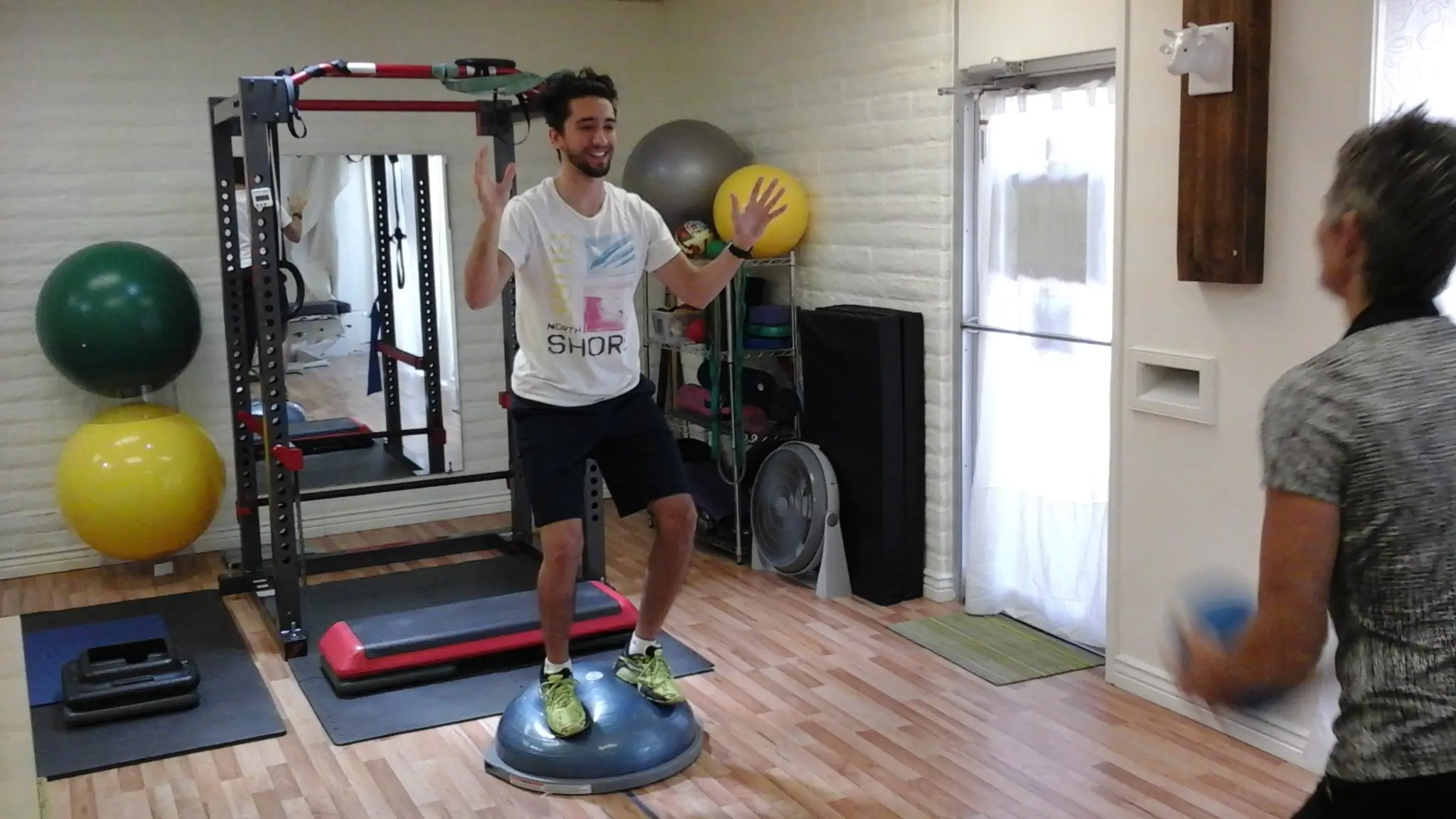
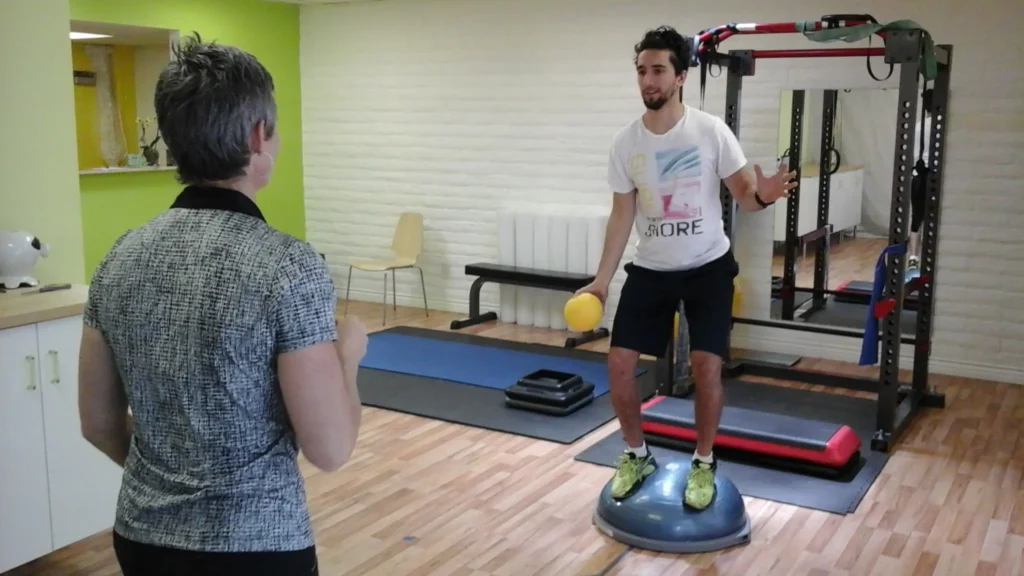
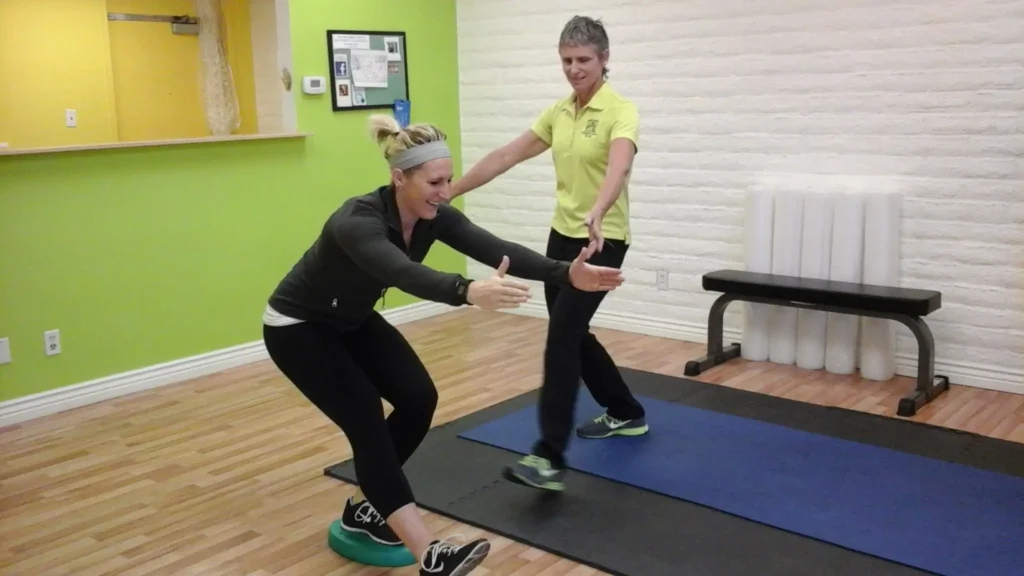
Physical therapy is the best option for balance and gait disorders. Our physical therapists can provide you with the best techniques for improving your balance and ability to walk. It’s important to get help if you are having trouble remaining steady, as you want to prevent falling and injuring yourself!
Balance and gait disorders belong to a family of functional problems that interfere with your positional awareness, your normal means of walking or running, and your ability to keep yourself upright.
Having to attend therapy should not be a cause for worry. Rest assured that you’re in good hands in our office!
When you arrive for your initial appointment, our physical therapist will conduct a comprehensive physical evaluation to examine your balance, gait, posture, medical history, and symptoms, before creating a personalized treatment plan made for your specific needs.
This treatment plan may include the following exercises and treatment methods:
Gait retraining exercises
Gait retraining involves teaching you how to correct problematic movements or patterns you have when walking or running. You may be walking with your feet too wide or with a limp that you don’t even realize it there. For runners, we analyze your movement patterns at speed, and determine what part of the running cycle needs adjustment. Your physical therapist at Orthopedic Sports Therapy may video you walking or running in order to show you the problem in slow motion, which helps many people to make the needed changes and improve gait or running patterns.
Strengthening exercises
Your physical therapy evaluation will help determine what problem areas in your body may need strengthening. Our physical therapist will provide you with strengthening exercises that will build up your muscles, thus making it much easier for you to walk and run more efficiently and reduce your risk of injury.
Stretches
Stretching will help improve your flexibility and your range of motion. This will give you more control and quicker reactions with your movements, also reducing your risk of injury. It will also keep your muscles from becoming too tight and stiff.
Vestibular rehabilitation
If your balance or gait disorder is due to an inner ear problem, that is called a Vestibular Balance Disorder. The physical therapists at Orthopedic Sports Therapy in Ahwatukee, Biltmore or Tempe, AZ will perform an evaluation to determine if your balance and gait problem is Vestibular. Once diagnosed, your physical therapist will provide you with treatments and specific exercises that will help to correct this problem.
This physical therapy treatment works to improve your vision, nerves, muscles, and the vestibular system as a whole, to maintain a steady balance.
So, what’s causing my balance or gait disorder?
Balance and gait disorders can develop from many different underlying conditions. Some balance disorders are related to issues in the vestibular system, which is responsible for your sense of position, also known as “proprioception.”
Your vestibular system is a delicate collection of fluid-filled chambers and sensory nerves, located in the inner ear, and thousands of nerve receptors in the joints throughout your body. Some common vestibular conditions resulting in balance disorders include:
Benign paroxysmal positional vertigo (BPPV)
BPPV occurs when calcium debris breaks off in the inner ear, causing issues with balance.
Injuries, ailments, Sedentary lifestyle and weakness
Even if your brain and nervous system are working in harmony with one another, a sudden injury, disease, accident, or other ailment causing muscle weakness can interfere with your balance and make it difficult to keep yourself upright. If you have a sedentary lifestyle and rarely do things that require good balance, your system will weaken and your balance will naturally deteriorate. The body is a “use it or lose it” machine!
Neurological issues
There are hundreds of different neurological issues that can result in balance and gait problems. They may include Parkinson’s disease, brain injury, or stroke.
Find relief for your balance or gait disorder today
Balance and gait problems do not have to rule your life. You can benefit from physical therapy! We’re here to assist you in getting back on your feet.
Request an appointment at Orthopedic Sports Therapy by clicking HERE today. We’ll help you find the right balance and teach you how to manage your condition in the future!
Sources:
- https://www.moveforwardpt.com/SymptomsConditionsDetail.aspx?cid=1bb9c784-a874-43b1-976f-d0de03c19f99
- http://www.apta.org/BalanceFalls/
- http://www.apta.org/Media/Releases/Consumer/2008/1/14/
- http://blog.arthritis.org/osteoarthritis/knee-pain-oa-walking/
- https://www.moveforwardpt.com/SymptomsConditionsDetail.aspx?cid=8b727ed1-48d5-48b3-9b11-dd8fcec59417
- https://vestibular.org/understanding-vestibular-disorders/treatment/canalith-repositioning-procedure-bppv